
Skip this for another season and the math is simple: a single wind-driven failure can buckle panels, snap a track loose, or blow the door inward entirely — and once the garage door goes, wind gets under the roof and into the attic, which turns a $200 repair into a five-figure insurance claim. Replacing a blown-in residential door typically runs anywhere from $1,500 to $4,000 depending on size and materials, and that's before you count water damage to whatever was stored in the garage or drywall repair where the door tore loose from the frame.
The Garage Door Is Your Home's Weakest Wall — Here's Why
Every other wall in a house is framed, sheathed, and tied into the structure with studs every 16 inches. The garage door opening is the single largest gap in that envelope, and the door filling it is made of thin steel, aluminum, or wood panels hung on rollers and tracks rather than bolted into framing. When wind hits a closed garage door, it's pushing against the weakest, least-braced surface on the house. If that door fails, the sudden pressure change inside the garage can push up on the roof structure from underneath — which is part of why severe-weather building codes in wind-prone regions require reinforced garage doors specifically, separate from every other wall.
Age makes this worse. Garage doors installed years ago often weren't built with reinforced struts, and the hardware holding rollers and tracks to the frame loosens over time from routine use, not just storms.
What This Time of Year Actually Brings
Sacramento's long dry stretch through summer and early fall leaves dust and sometimes wildfire smoke residue sitting in the tracks, on the rollers, and in the opener's sensors — all of it drying out lubricant and grinding away at moving parts. Then the pattern flips: winter rain arrives, often in the form of atmospheric river storms that bring sustained wind gusts along with heavy rainfall. A door that's been coasting on dry-season neglect meets its first real test exactly when conditions are worst — wet, windy, and often at night when a failure is hardest to notice until it's already caused damage.
Signs Your Door Won't Hold Up
- Visible flex or bowing when you push on a panel — reinforced panels shouldn't give under hand pressure.
- Daylight gaps along the sides or bottom where weatherstripping has shrunk, cracked, or pulled away.
- Worn or cracked rollers that let the door wobble in the track instead of running flush.
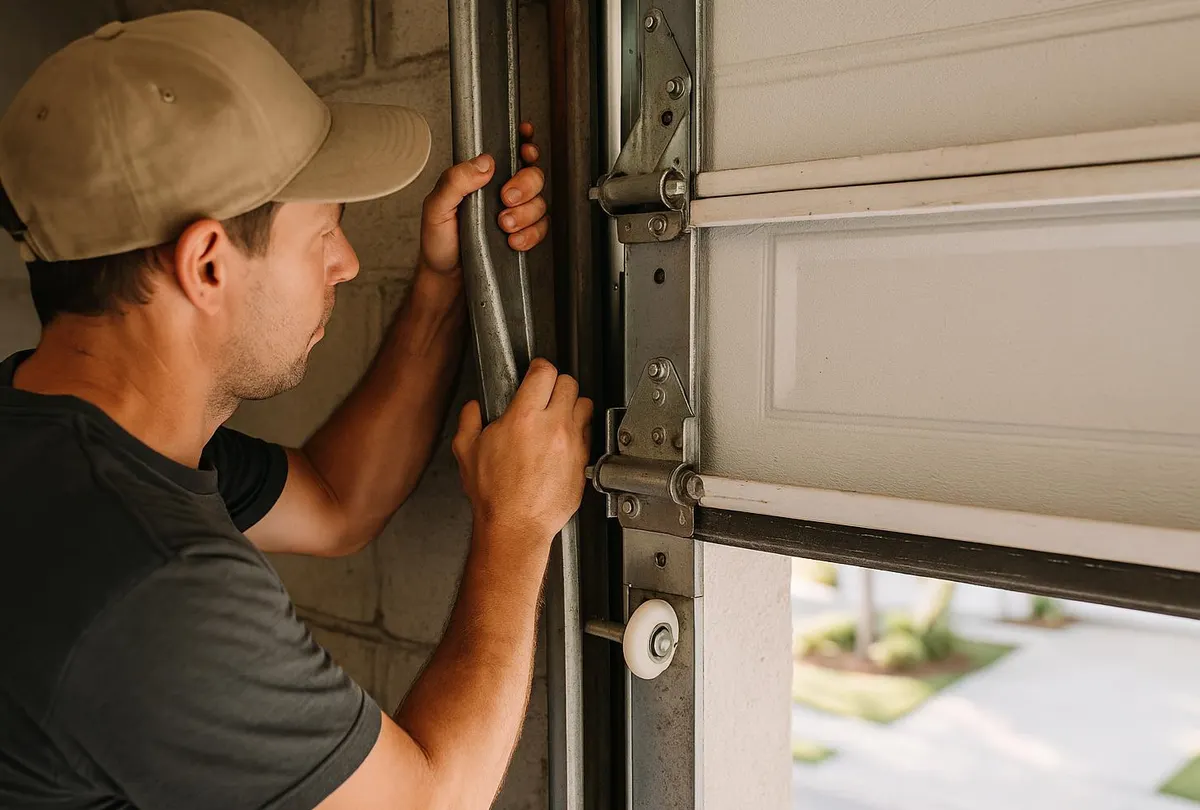
- Loose track brackets — grab the track and check for play; it should feel solid against the frame.
- No battery backup on the opener, which matters because storms that bring wind also tend to knock out power, leaving a door stuck wherever it was when the outage hit.
- Springs that look stretched, rusted, or unevenly tensioned — a door with failing springs is already working harder than it should before wind is even a factor.
Getting the Door Ready Before the Next Storm
- Inspect panels for dents, rust, and hairline cracks. Damage that looks cosmetic now is a failure point under wind load.
- Clean and lubricate tracks and rollers to clear out dry-season dust and smoke residue before wet weather turns it into grit that grinds down hardware.
- Tighten all hardware — hinges, track brackets, roller brackets — since vibration from regular use loosens these over months without anyone noticing.
- Replace worn weatherstripping along the bottom and sides to keep wind-driven rain from pushing underneath the door.
- Check spring balance by disconnecting the opener and lifting the door halfway — it should hold position. If it drops or shoots up, the springs are compensating incorrectly and adding strain during wind gusts.
- Consider a bracing retrofit kit for an older door rather than replacing it outright — it's a lower-cost way to add horizontal struts and reinforced end brackets, though a full wind-rated door replacement is the more durable long-term fix if the panels themselves are already compromised.
- Test the manual release so you know how to operate the door by hand if the opener loses power mid-storm.
Worth noting: the same reinforcement that helps a door resist wind pressure — stronger end brackets, better-anchored tracks — overlaps with the kind of bracing used in seismic retrofits, so addressing one often strengthens the other.
When to Call Sacramento Garage Door Co
If your door flexes under pressure, the springs look uneven, or you're hearing new grinding or popping sounds when it opens and closes, that's the point to get it inspected rather than wait for a storm to make the decision for you. Our Garage Door Maintenance service covers the full inspection — tracks, rollers, hardware, weatherstripping, spring tension — and catches the small failures before they become a wind-driven one. If the springs themselves are shot, our Spring Replacement service gets the door back to proper balance so it isn't working against itself during a gust. For older doors with real structural wear, we'll walk you through bracing retrofit options versus full replacement so you're not overspending on a fix that won't hold.
If you're anywhere from Sacramento to Elk Grove, Rancho Cordova, West Sacramento, Citrus Heights, Roseville, Folsom, or Davis and want your garage door checked before the next storm rolls through, give Sacramento Garage Door Co a call. We're on Greenhaven Dr and we show up ready to get it right the first time.